
Logistics is an indispensable function connecting the Rengo Group's business activities to our customers. It is also a key foundation supporting our business.
In recent years, the prevalence of long working hours has become an issue in the logistics industry. There is a need for the industry to improve drivers' working environments and protect their health. Amid changes such as the application of an upper limit on overtime hours to truck drivers in 2024, there are also concerns about a reduction in transportation capability due to driver shortages and aging.
We recognize this situation as an important management issue for the Group and are advancing initiatives to improve overall supply chain efficiency and achieve sustainable logistics.
Promoting Safety and Reducing Burden for Logistics Workers
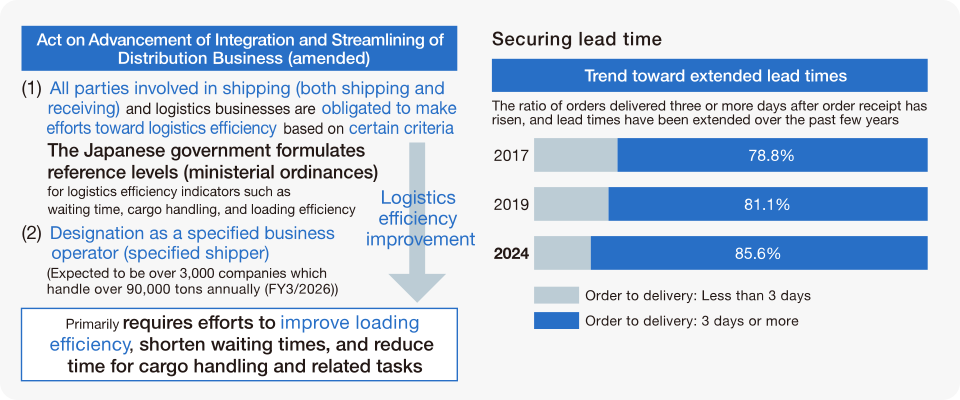
Ensuring delivery lead time
Current lead time at Rengo
Shorter delivery lead times reduce the flexibility of production and transportation planning and can lead to increased workloads for drivers, reduced safety, and lower efficiency throughout the supply chain.
After an order is received, corrugated packaging goes through production planning, followed by manufacturing and shipping before delivery. As containerboard and other raw materials are procured according to the production plan, product lead times also affect raw material procurement lead times.
We consider approximately three days after order placement to be the minimum lead time required for corrugated packaging. However, lead times are becoming shorter against the backdrop of the need to reduce inventories and respond to demand fluctuations, and 14.4% of our deliveries are made within two days of order placement (same-day or next-day delivery).
This also impacts upstream papermaking processes, shortening containerboard lead times to one to two days and, in some cases, requiring same-day delivery.
Initiatives toward securing lead time
To improve this situation, we are implementing initiatives toward securing appropriate lead times. By having customers place orders with sufficient lead times, we can optimize our transportation plans, leading to higher transportation efficiency and lower driver workload. This also contributes to improved loading efficiency (an increase in the weight of cargo per trip by each driver), as required by the amended Logistics Efficiency Act.
Meanwhile, customers are also facing the issue of securing storage space. Therefore, we are gaining their understanding through careful communication while also advancing specific improvements, such as asking them to secure storage space by installing fixed racks and changing layouts.
Through these initiatives, the percentage of corrugated packaging deliveries with a lead time of three or more days improved from 78.8% in 2017 to 85.6% in 2024 (Rengo Group data). The lead time for containerboard deliveries in the Paperboard Business Unit has also increased by 0.5 to 1.0 days.
The Group promotes improvements in efficiency across the supply chain and in the work styles of logistics workers through co-creation with customers.
Structural Reform and Digital Transformation Toward Improvement of Logistics Efficiency
Improving transportation efficiency through restructuring of logistics sites
Corrugated packaging production sites consist of paperboard mills, which make containerboard, and corrugated plants, which combine containerboards and process them into corrugated board and boxes. Containerboard is transported from paperboard mills to corrugated plants.
We have one of the largest integrated paperboard and corrugated packaging production structures in Japan. Our average shipment volume of containerboard per day is 7,000 tons, and the total number of trucks used to transport products between warehouses and for shipping reaches approximately 900.
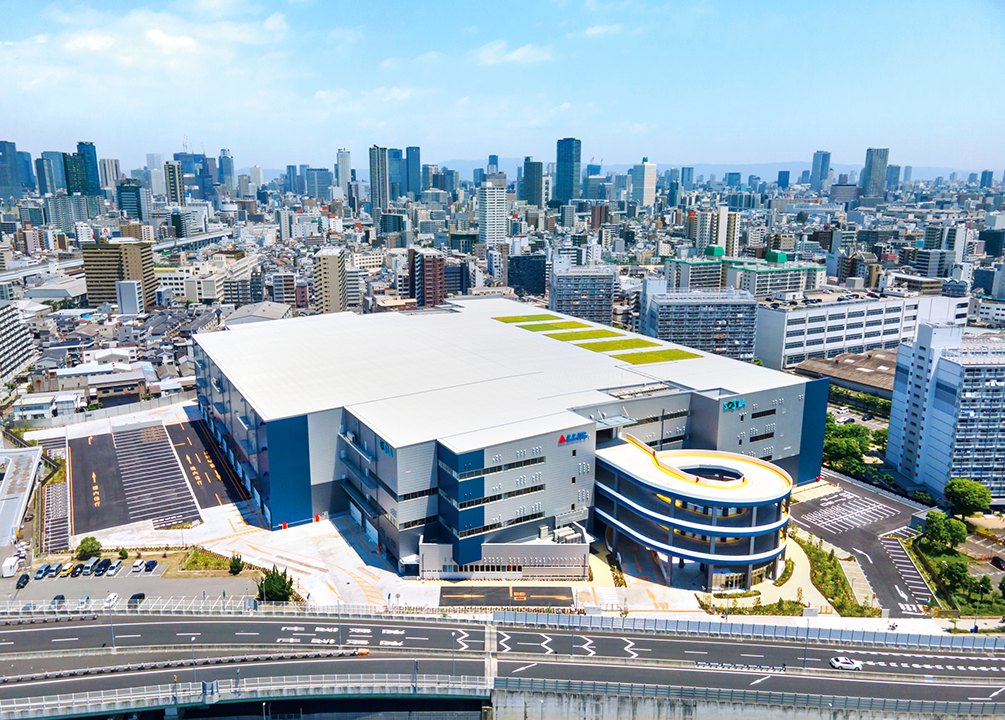
In order to reduce labor hours related to this transportation and reduce the burden on drivers, we reorganized our logistics sites. Medium- to small-sized containerboard warehouses scattered in various locations were consolidated into the three large-sized sites: Yashio Logistics Center, Yashio Second Logistics Center, and Yodogawa Logistics Center.
Through this restructuring, transportation between warehouses and the number of times trucks are loaded have been reduced, improving the operating efficiency of trucks. As a result, CO2 emissions have been reduced, and the burden on drivers has also been eased through shorter operating hours and secured rest time.
Reducing driver workload through RFID-based integrated containerboard management
With the implementation of the Act on the Arrangement of Related Acts to Promote Work Style Reform, an upper limit on overtime hours has been set for truck drivers, and working environments are being reviewed across the logistics industry. There is also a need to reduce incidental work performed by drivers in the manufacturing and transportation of paperboard and corrugated packaging.
In the process of transporting containerboard from paperboard mills to corrugated plants, incidental work other than cargo handling was a burden on drivers, leading to longer cargo handling and waiting times.
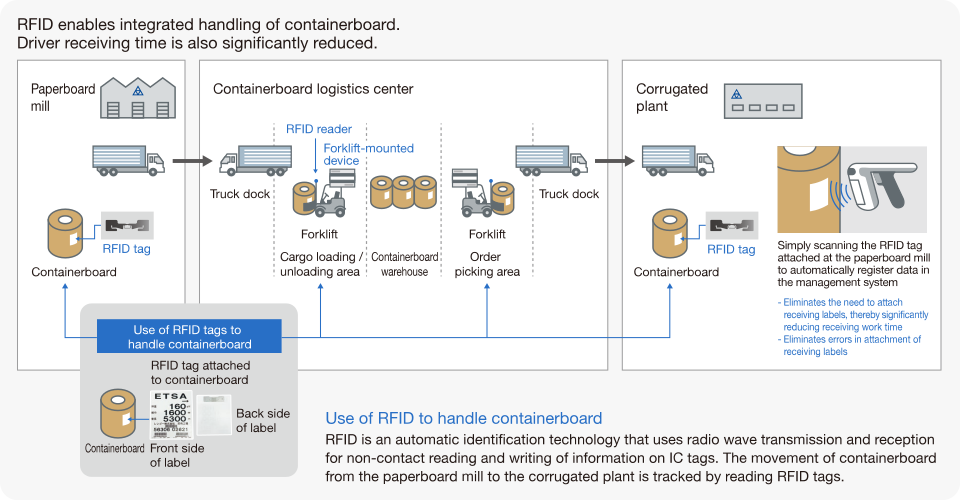
To address these issues, we have equipped product labels with radio frequency identification (RFID) tags and introduced product management using contactless data reading.
This allows in-house staff to check shipments by scanning RFID tags from the driver’s seat of the forklift, reducing incidental work. Furthermore, the use of RFID at corrugated plants helps improve the efficiency of checking deliveries and reduces the task of attaching labels.
Through the active use of digital technology (DX), the Rengo Group has reduced the burden on drivers, improved safety, and reduced work time, while aiming to realize "white logistics."
Using RFID for integrated handling of containerboard from the paperboard mill to the corrugated plant
Streamlining transportation and incidental work through DX
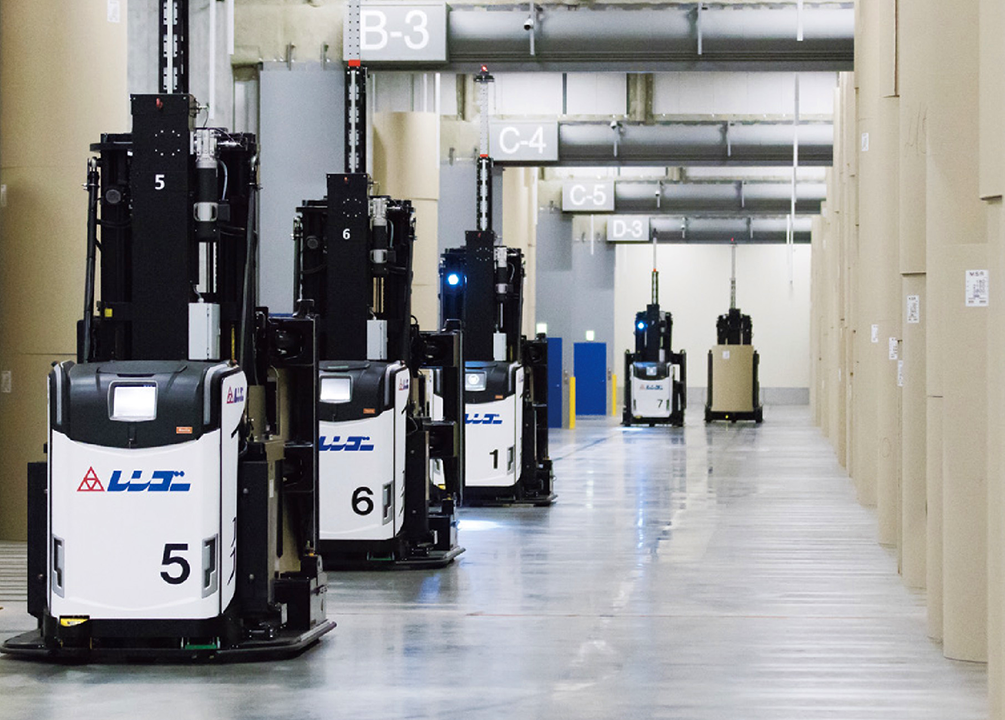
The Yodogawa Logistics Center is actively promoting digital transformation (DX) to save labor in aligning cargoes, guiding trucks, and loading operations.
A system to manage the order of trucks called catmotion automates guidance to the loading areas. Shipment preparation is carried out efficiently in conjunction with a picking app, which is installed on clamp-type forklifts used for aligning cargoes.
In addition, by introducing unmanned clamp-type forklifts, which are equipped with AI and guided by laser, we achieved labor savings and shortened the time required for work in warehouses through sharing work with manned forklifts. We developed a system in which cargoes are ready for loading by the time trucks arrive at the loading areas, enabling immediate loading.
Going forward, we will expand these initiatives to warehouses at other sites and further promote greater efficiency in logistics as a whole.
Resolving Social Logistics Challenges Through Packaging
As a company responsible for creating packaging essential to logistics, we work to resolve logistics challenges across the supply chain.
We started operating the shared material management system WASRen in 2021 as a support system that assists customers in streamlining their material management. It facilitates smooth ordering operations between Rengo and our customers. The introduction of this system improves the efficiency of inventory management and order placement, and at the same time, helps to secure lead time for material ordering.
The Rengo Group accurately identifies the logistics issues and needs of customers, developing technologies and offering proposals that address these issues and needs through both packaging formats and packaging systems.
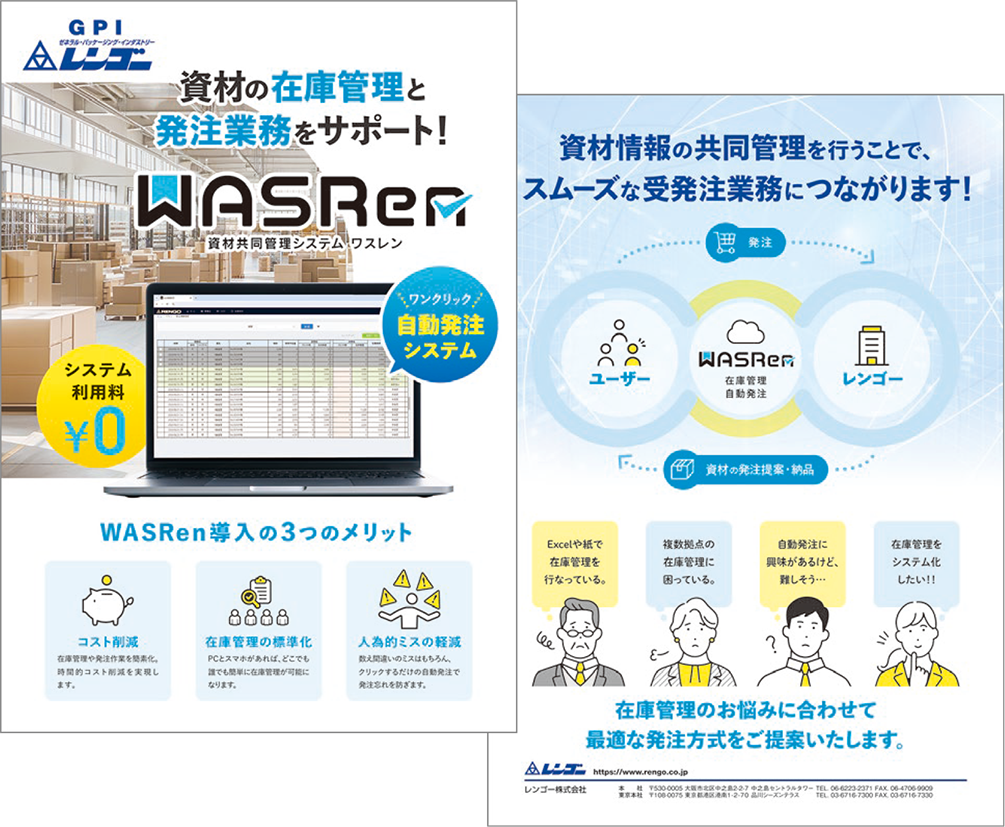
material management system WASRen