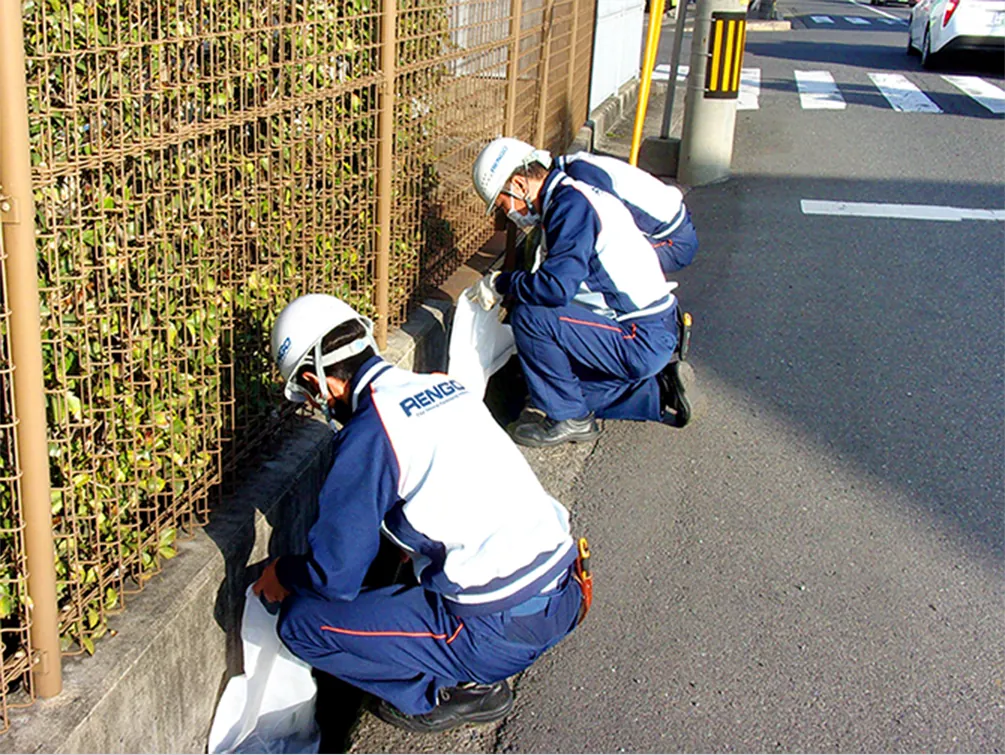
Clean-up Activities
Each division regularly conducts clean-up activities in the surrounding areas and also participates in local cleaning events, continuously engaging in community-based environmental activities.
Emergency Supply Support Such as Corrugated Beds During Disasters
In the event of natural disasters such as earthquakes and typhoons, Rengo delivers corrugated mats for shelter flooring, partitions, corrugated beds, and corrugated boxes as emergency relief supplies in response to requests from local governments and other organizations.
Making use of the decentralized nature of our corrugated packaging business, we will continue our efforts to ensure that the warmth and comfort of corrugated packaging can be of some help in providing safety and peace of mind to those affected by disasters.
In addition, we are working to conclude disaster prevention agreements with local governments across Japan to ensure smooth supply of emergency relief materials in the event of a disaster.
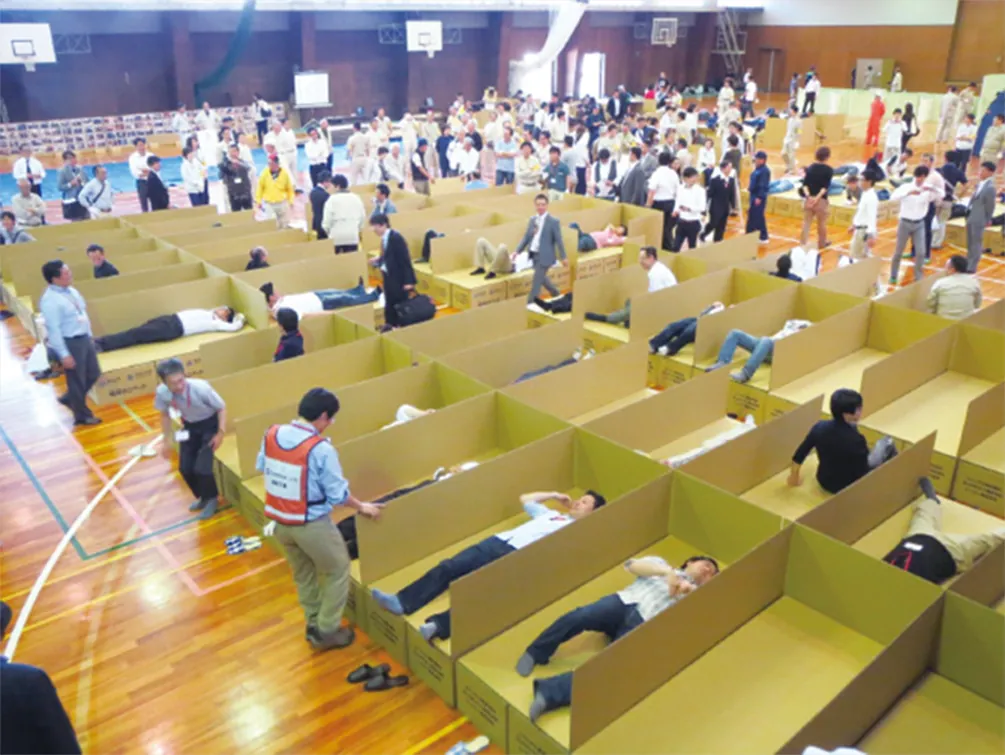
Disaster drills using corrugated beds 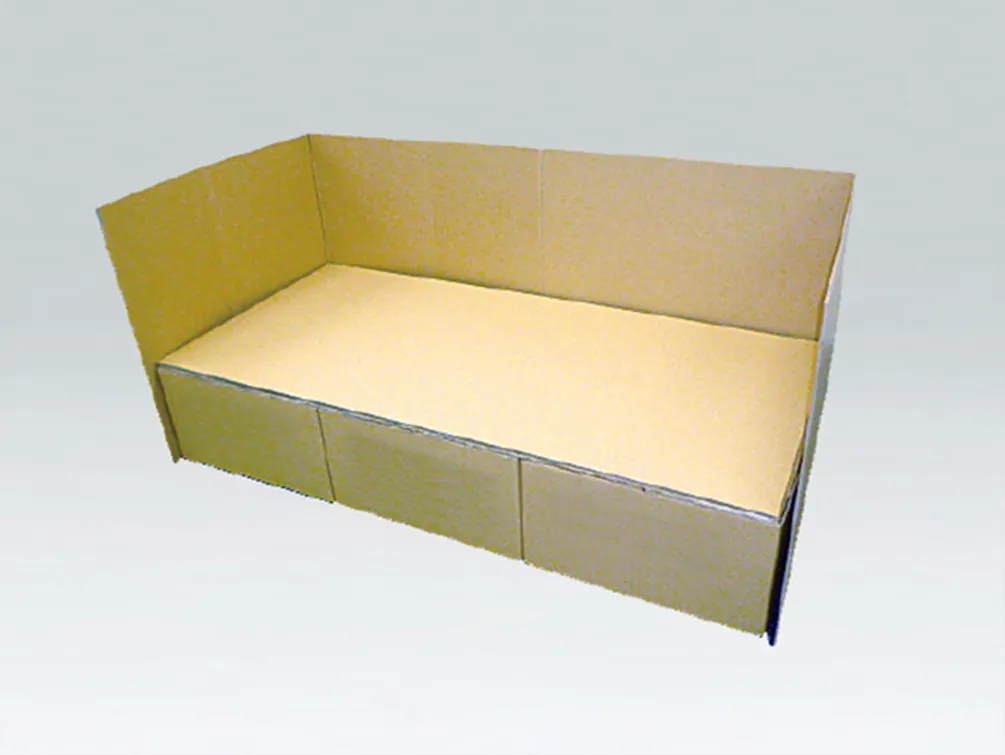
Corrugated beds 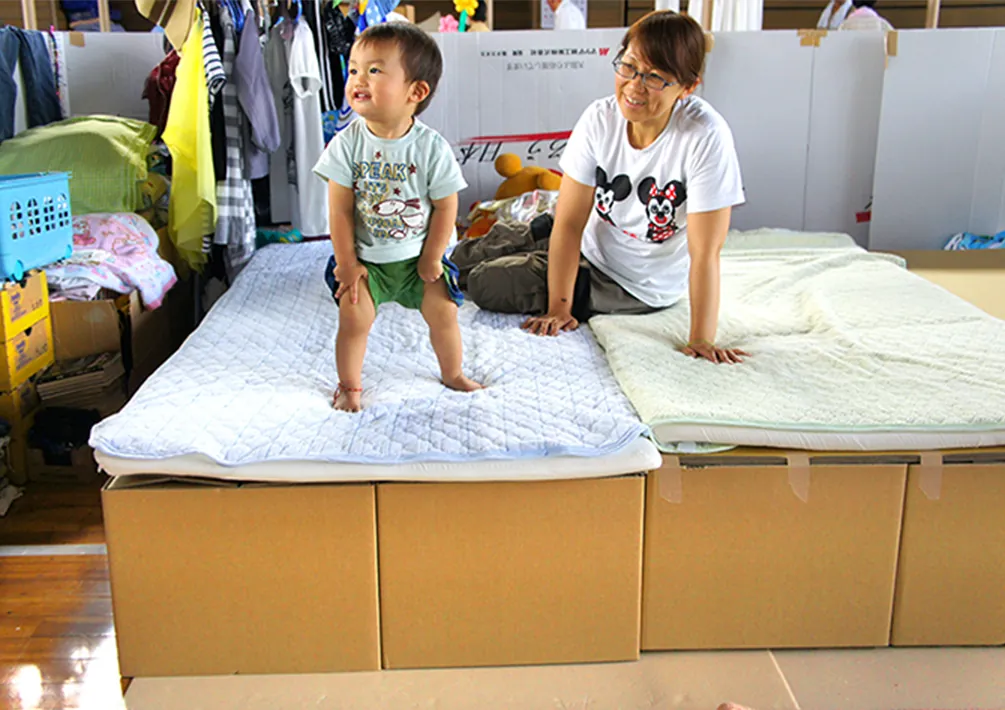
Corrugated beds are also attracting attention from a health perspective 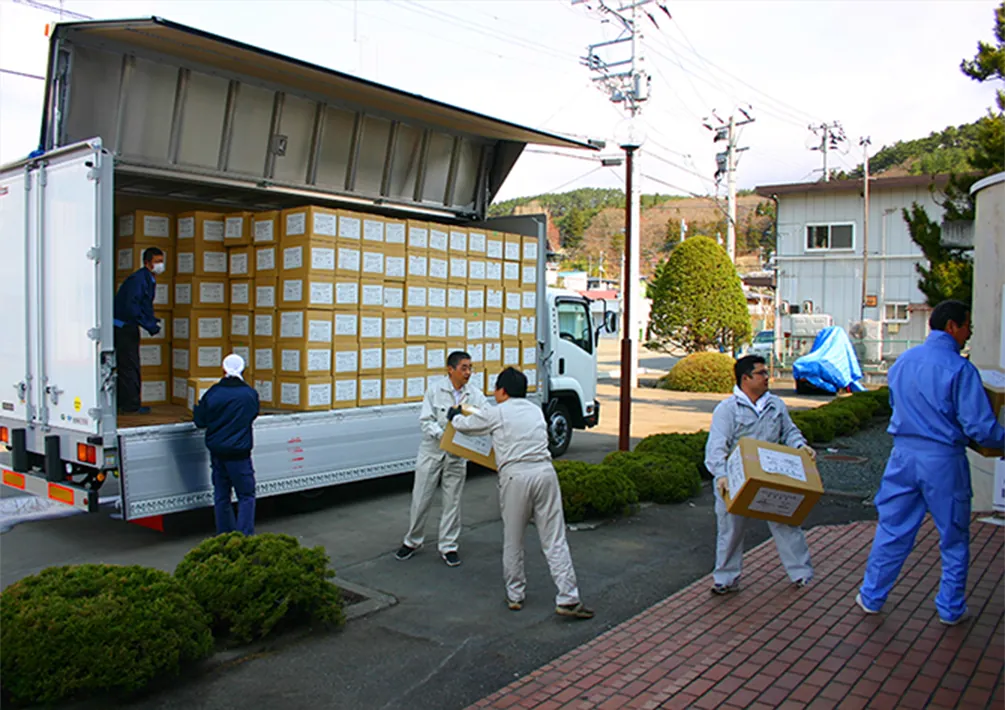
Also used for transportation of emergency relief supplies
Joint Research Through Industry-Academia Collaboration
As a leading company in packaging, Rengo has long conducted joint research with various universities, mainly focused on packaging-related studies. Having been the first in Japan to commercialize corrugated packaging and lead the industry as a pioneer, Rengo has continued to develop numerous innovative functions, materials, and manufacturing technologies that expand the possibilities of packaging. Going forward, as the General Packaging Industry (GPI) Rengo, we will continue to open up the future of packaging.

Laboratory of Tree Cell Biology, Division of Forest and Biomaterials Science, Graduate School of Agriculture, Kyoto University
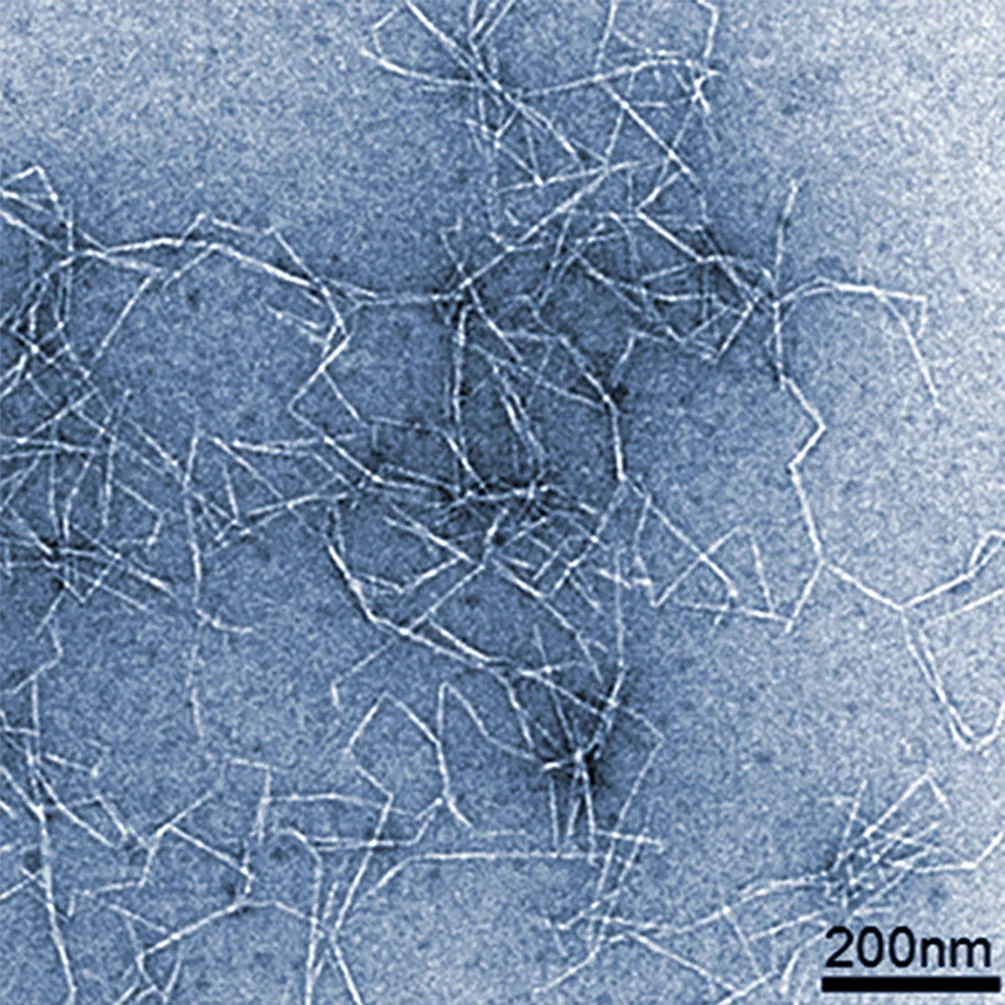
Structural Analysis of Cellulose Nanofiber (CNF)
Using transmission electron microscopy (TEM), we evaluate the nanometer-scale structure of the CNF developed by Rengo. Our research to date has confirmed that both our xanthated CNF (XCNF®) and the pure CNF (FineNatura®) obtained by removing the xanthate groups have fiber diameters of 3–8 nanometers. In addition, by observing cellulose nanofibers prepared under various conditions, we are accumulating information useful for manufacturing and understanding material properties.
Engineering Biology Research Center, Kobe University
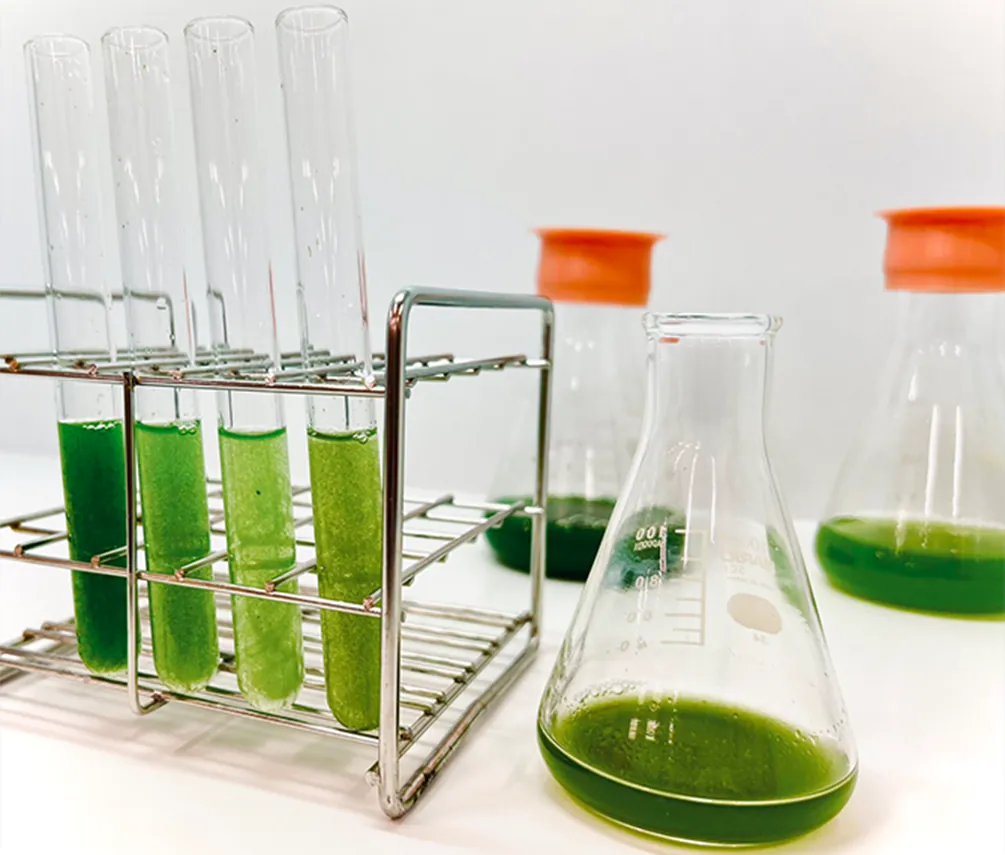
Research on Highly Efficient Cultivation Methods of Microalgae
Microalgae absorb carbon dioxide through photosynthesis and produce various useful substances such as oils and polysaccharides. Due to their rapid growth rate, they have attracted attention as a potential alternative to fossil resources. Rengo is working to shift from fossil resources, such as petroleum used as raw materials for plastic packaging, to biomass resources.
To apply microalgae to general-purpose chemicals such as plastics, it is necessary to culture them inexpensively, stably, and on a large scale. We are therefore conducting research to develop highly efficient cultivation methods.